Category: The ALISON D. GILBERT Blog
Exploring ART & DESIGN and MUSIC | FOOD & HEALING | SOCIAL MEDIA MARKETING | RAISING SOCIAL AWARENESS | THE ECONOMY & THE ENVIRONMENT |

Exploring ART & DESIGN and MUSIC | FOOD & HEALING | SOCIAL MEDIA MARKETING | RAISING SOCIAL AWARENESS | THE ECONOMY & THE ENVIRONMENT |
See on Scoop.it – The Cultural & Economic Landscapes
Retailers won’t disclose how much money they’re getting from SNAP. Why not?
The entire SNAP or food stamps system is becoming more of a disgrace. This article just adds to the outrageousness of it.
See on www.motherjones.com
See on Scoop.it – The Food rEvolution
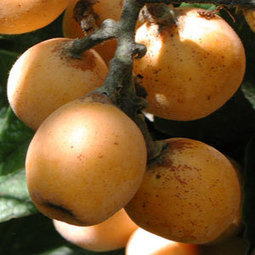
“If you don’t know what a loquat is, you probably aren’t alone. A loquat is a fruit that grows on a tree in China, although farmers in California, the Middle East, and South America have learned how to grow very nice loquats.”
They sound delicious. I would like to try a loquat.
See on www.ayushveda.com
See on Scoop.it – The Food rEvolution
"Nobel laureate says ‘people of conscience’ must break ties with oil and gas companies that are destroying planet’s future"- Jon Queally, staff writer
See on www.commondreams.org
See on Scoop.it – The Food rEvolution
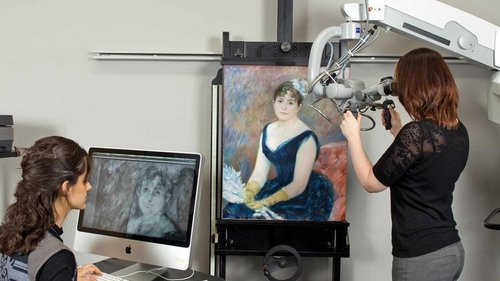
When conservators at the Art Institute of Chicago wanted to find the missing pigment in a portrait by Pierre-Auguste Renoir, they used laser light to reveal the original hues.
Nothing lasts forever as proved by an advanced technique for painting color analysis. A laser technique called surface-enhanced Raman spectroscopy reveals that the red has faded in a Renoir painting circa 1883. This is due in part to the fact that the red pigment, carmine lake, was ‘made from crushed and ground cochineal insects that live on cactuses in Mexico and South America.’
See on www.nytimes.com
See on Scoop.it – The Food rEvolution
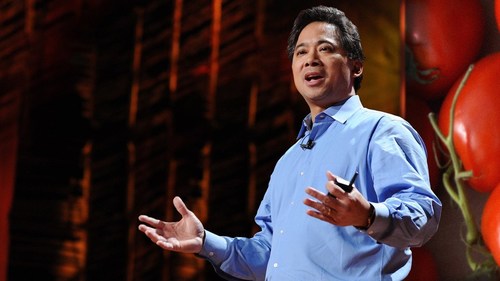
In this 2010 Ted-Ed Talk Lesson, educator Dr. William Li discusses the concept of angiogenesis, the growth of new capillary blood vessels in the body and how certain foods can be used in the anti-a…
Food can be very powerful medicine.
See on laughingsquid.com
See on Scoop.it – Global Evolution: Will we be in time?
The worst accident in Everest’s history underscores an unfortunate reality: ascents have gotten safer for Westerners, but not for Sherpas.
Will our consciousness change enough to prevent another tragedy like this from happening? I see no reason why not as long as enough people are made aware of the inhuman circumstances surrounding ‘recreational’ climbs up Mount Everest and others like it. The lives of those who can’t afford the luxury of doing this for recreation should not be put on the line for those who can. Something must be done about this inequity NOW.
See on www.newyorker.com
See on Scoop.it – Avant-garde Art & Design
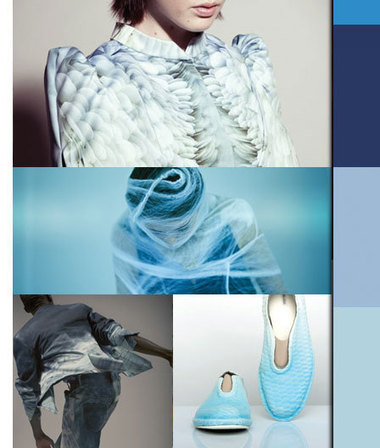
“According to PANTONEVIEW.com contributor OLTMANS VAN NIEKERK, the digital universe is vast and impossible to pin down. Its pervasive force has had a major impact on the way we live and work. It seems that everything that people think is important is virtual and everything and everybody is in a hybrid, digital state. The digital is invisible and everywhere. No hard disks, no desktop computers, no fixed place. The asset-light generation embraces simplicity in order to gain freedom.”
I am not especially fond of the blues show here. Nor am I excited about ‘these new waves of blues trending for 2014 and beyond.’
See on www.pantone.com
See on Scoop.it – Global Evolution: Will we be in time?
M. Sanjayan, a host of Showtime’s new series on climate change, talks about almost dying on set, telling the stories behind science, and the new face of global warming.
According to this scientist, we are too late to stop global warming. Climate change is already part of our present day world.
See on grist.org
See on Scoop.it – The Cultural & Economic Landscapes
The worst accident in Everest’s history underscores an unfortunate reality: ascents have gotten safer for Westerners, but not for Sherpas.
The tragedy on the recent Mount Everest climb injured nine. I addition, it took the lives of sixteen Nepali guides.
"Although many news reports indicated that all the victims were Sherpas, the legendary mountain people who comprise just half of one per cent of the Nepali population, three of the sixteen were members of other, much larger ethnic groups: one was Gurung, one was Tamang, and one was a member of the Hindu Chhetri caste.
All, however, were employed as high-altitude climbing sherpas, with a lowercase “s”—an élite profession that deservedly commands respect and admiration from mountaineers around the world."
See on www.newyorker.com
See on Scoop.it – Avant-garde Art & Design
It’s being called “the most beautiful, haunting infomercial you’ll ever see.”
This video is addictive and eerie at the same time. It does tell an ‘Orwellian’ story of what has become of the food industry and what can be if we take back our power, our passion and our hearts.
See on gawker.com